
Raising Awareness of Autoimmune Disease in Native Communities
For the second year in a row, the Autoimmune Association proudly participated in Tulsa’s Native American Day celebration, held Monday, October 13, at Dream Keepers Park. The event drew thousands of attendees eager to honor Native heritage, and we offered an opportunity to learn about autoimmune disease in native communities.
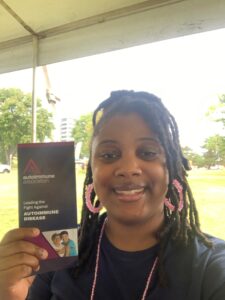 Representing the Autoimmune Association was volunteer Raveen Jeffers, the Autoimmune Association’s 2024 Patient Advocate of the Year, who spent the day sharing information, listening to stories, and connecting with attendees about autoimmune disease and the need for better support for autoimmune patients. The Association’s booth drew significant interest from community members seeking to learn more about autoimmune conditions, access to care, and how to support loved ones living with chronic illness.
“So many people shared their struggles with autoimmunity,” Raveen said. “I want to offer as much information as I can because there’s such a need.”
Addressing the Burden of Autoimmune Disease in Native and Rural Communities
Native American and Indigenous communities experience disproportionately higher rates of autoimmune disease, including lupus, rheumatoid arthritis, multiple sclerosis, and Sjögren’s, compared to the general U.S. population. Many individuals living with autoimmune in rural communities also face barriers such as limited access to specialists, long travel distances for care, and lack of culturally informed resources.
Researchers point to a combination of genetic, environmental, and socioeconomic factors that contribute to the higher prevalence of autoimmune in Native and Indigenous populations. These challenges highlight the urgent need for community-based education, culturally sensitive outreach, and expanded support for autoimmune patients across all communities.
Celebrating Culture, Connection, and Resilience
This year’s celebration, hosted by the Greater Tulsa Area Indian Affairs Commission, featured traditional music, art, and cuisine from tribes across Oklahoma. The theme “From Trails to Triumph” honored the perseverance and cultural strength of Native peoples throughout history.
Tulsa Mayor Monroe Nichols recognized the city’s origins and the tribal nations whose reservation land Tulsa sits upon, underscoring the importance of community and shared resilience—values that align closely with the Autoimmune Association’s mission to uplift and empower all those impacted by autoimmune disease.
Advancing Awareness and Equity
As part of its ongoing commitment to expanding awareness and empowerment, the Autoimmune Association continues to reach into underserved and underrepresented communities, ensuring that every person affected by autoimmune disease has access to the information, resources, and support they need.
Raveen added, “When people have a place to talk about their challenges, they feel empowered.”
Events like Tulsa’s Native American Day celebration create meaningful opportunities to listen, learn, and build connections that lead to greater understanding and stronger, healthier communities. By fostering partnerships and outreach in rural, Native, and Indigenous communities, the Autoimmune Association is helping to close gaps in care and bring hope to millions living with autoimmune disease.
Join our email list
Receive the latest blog articles, news, and more right to your inbox!
Related articles you might be interested in
Autoimmune Association Backs PBM Reform Bill
Autoimmune Association Announces Inaugural Hope Journey Walk Inviting Communities to “Lace Up for Hope”
Study Reveals Top Environmental Concerns Impacting Autoimmune Patients
Meet the 2025 Young Adult Advisory Council: Empowering the Next Generation of Autoimmune Advocates
Find more resources on autoimmunity
Learn more about autoimmunity, diagnosis tips, how to find a physician, and more.